How Google LSA Helps Local Businesses Get More Calls and Customers?
Learn how Google Local Services Ads help local businesses increase visibility, generate more calls, attract qualified leads, and connect with customers actively searching for their services.
Running a local business in 2026 is a different beast than it was just a few years ago. With AI Overviews (AIOs) and "AI Mode" taking up more real estate at the top of search results, traditional organic listings are being pushed further down the page.
If you want your phone to ring today, you need to be where the eyes are. That place is Google Local Services Ads (LSAs).
Here is how Google LSAs are helping local businesses cut through the noise, build instant trust, and—most importantly—convert searches into actual customers.
Prime Real Estate: Above the AI and the Rest
Visibility is the ultimate currency in local search. Google Local Services Ads (LSAs) claim the absolute "Position Zero," sitting prominently above traditional paid ads, the Map Pack, and organic results. By occupying this premium top-of-page real estate, your business captures immediate attention before a user even begins to scroll down.
Beating the "AI Block"
As Google integrates AI Overviews (AIOs) into the top of the search results, organic listings are being pushed further down the page, creating an "AI Block" that can hide even the best SEO efforts. LSAs are the strategic solution to this challenge. Because they appear above the AI-generated answers, they remain the first point of interaction for customers. This ensures that while AI handles general information, your business remains the primary destination for users ready to hire and take action.
The "Three-Pack" Evolution
The traditional Local Three-Pack was once the holy grail of local SEO, but it has evolved into a highly competitive and often crowded space. With the introduction of LSAs, the hierarchy of the search page has shifted. These ads provide a "super-powered" version of the map listing, featuring the prestigious Google Verified badge. This evolution means that relying solely on organic local rankings is no longer enough; LSAs provide the necessary edge to stay relevant as the Three-Pack becomes increasingly saturated.
Mobile Dominance
In 2026, the majority of local service searches happen on mobile devices while users are on the go. On a smartphone’s smaller screen, LSAs frequently occupy the entire first viewable area, effectively monopolizing the user’s initial focus. This mobile dominance is crucial because it pairs high visibility with high utility; featuring "Click-to-Call" buttons that allow a customer to contact you in a single tap. By dominating the mobile screen, LSAs convert the "need-it-now" mindset into immediate phone calls and leads.
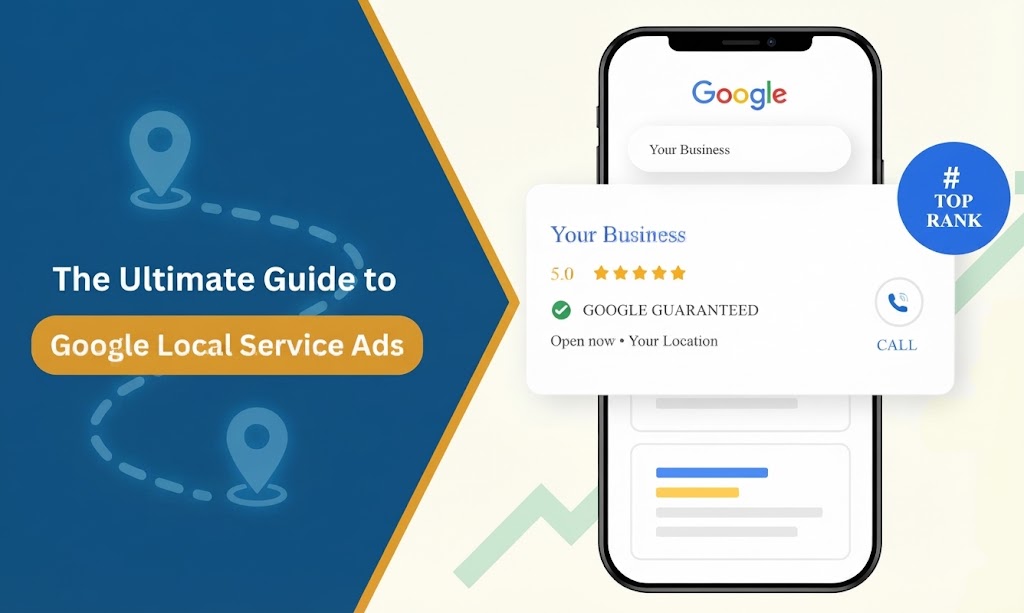
The Power of the "Google Verified" Badge
Trust is the currency of 2026. With the rise of AI-generated content and spoofed listings, customers are more skeptical than ever.
Google’s screening process (formerly known as the Google Guarantee or Google Screened) has unified under the Google Verified blue badge. This badge tells a customer:
You have passed a rigorous background check.
Your licenses and insurance are valid and up to date.
Google "vretches" for your business's legitimacy.
Pay-Per-Lead vs. Pay-Per-Click
The most significant advantage of LSAs in 2026 is the Pay-Per-Lead model, which offers far more budget protection than traditional Pay-Per-Click (PPC) ads. With PPC, you pay for every click, regardless of whether the user calls or immediately bounces. Conversely, LSAs only charge you when a customer actually contacts you via phone, text, or booking. Furthermore, Google’s automated system now monitors lead quality, often issuing credits for invalid inquiries like spam or wrong-service requests, ensuring your marketing dollars only fund genuine opportunities.
Lowering the Friction to "Book Now"
The modern customer doesn't want to click through to a website, find a contact page, and fill out a form. They want a solution now. LSAs are built for speed:
Direct Call Buttons
The "Click-to-Call" functionality remains the powerhouse of Local Services Ads, especially for emergency services like plumbing or locksmiths. When a user is in a pinch, they don't want to browse; they want to talk to a human. These prominent buttons allow for a seamless transition from a Google search to a live conversation in one tap. Because Google tracks these calls as verified leads, you gain clear data on your ROI while providing the instant gratification mobile users demand.
Direct Messaging
Not every customer is in a position to make a phone call, especially during work hours or late at night. The Direct Messaging feature within LSAs caters to the growing preference for text-based communication. It allows potential clients to request quotes, ask about availability, or send photos of their project directly through the Google interface. This low-pressure interaction often captures leads that might otherwise shy away from a phone call, widening your net of potential customers.
Live Booking
The pinnacle of the "Frictionless" experience is Live Booking integration. By syncing your professional calendar (like Housecall Pro or Jobber) directly with your LSA profile, customers can see your real-time availability and claim a spot instantly. This 24/7 digital receptionist eliminates the "phone tag" game and secures the job before a competitor even checks their voicemail. In 2026, providing this level of autonomy to the user is a massive competitive advantage that drives high-intent conversions.
Ranking Factors: It’s Not Just About the Money
Unlike traditional ads where the highest bidder often wins, LSA rankings are influenced by how well you actually run your business. Google prioritizes:
Responsiveness
Google tracks your response time down to the minute, and in 2026, speed is a non-negotiable ranking signal. If you consistently miss calls or leave messages hanging, Google will lower your ad position to protect the user experience. High responsiveness proves you have the capacity to handle new business, signaling to the algorithm that your profile is "active." To stay at the top, aim to answer every inquiry within seconds, as the first five minutes are the "golden window" for conversion.
Review Recency
While a high star rating is great, Google now places massive weight on how recently those reviews were posted. A business with ten fresh reviews from the last month will often outrank a competitor with hundreds of five-star reviews from three years ago. This "review velocity" signals that your business is currently operational and consistently satisfying customers. Maintaining a steady pulse of new feedback is the most effective way to demonstrate ongoing reliability and keep your LSA visibility high.
Proximity
Proximity remains a foundational "structural" ranking factor that you can't simply pay to bypass. Google’s "Vicinity" logic ensures that the most relevant results are often the ones closest to the searcher's physical GPS location or IP address. While you can set a broad service area, your physical office address acts as an "anchor." Strengthening your prominence through reviews and authority can slightly widen your reach, but Google will almost always favor the verified pro who is right around the corner.
Is Your Business Ready for LSAs?
Determining if your business is ready for LSAs comes down to two things: your paperwork and your process. You must have updated general liability insurance and valid professional licenses ready for Google’s background check. Beyond the legalities, your team must be prepared to answer the phone immediately. If you can handle high-intent leads and pass the verification, you're ready to dominate.